
The complete guide
German Water Bath Canning
Everything I’ve learned about canning low-acid food the German way, gathered in one place: the science, the practice, and the recipes.
A friend once asked me which book she should read to learn German water bath canning. There wasn’t one, I told her. Not in English, at least not one that brought the science and the practice together. That conversation is why this site exists.
I’m Julie Kaiser, a molecular biologist who spent a decade in virology and national security research labs before becoming a science writer. No one had written this down for English-speaking canners, so I went to the primary sources and reconstructed it myself. Below, everything I’ve found, grouped by topic.
German water bath canning (Einkochen) is a tradition more than a strict procedure. In Germany and other parts of Europe, people have safely preserved low-acid foods this way for over 120 years. It isn’t the same as pressure canning, and no home method is ever 100% safe. But done with care and understanding, it has a long, practical safety record.
How does German water bath canning work?
The German method isn’t governed by a single official rulebook. It’s built from a protocol (clean jars, long boiling times, careful seal observation) applied consistently across different foods and different kitchens.
The safety comes not from any one step but from each step reinforcing the others. These posts break down the method: the core procedure, the equipment, the rules from the German Federal Institute for Risk Assessment (BfR), and how to can in Weck jars.
Is German water bath canning safe?
When I decided to start canning outside of USDA guidance, I already knew enough about botulism to know I couldn’t be casual about it. Before I could accept the risk, I needed to understand the method completely: whether the German approach was grounded in real science or running on tradition alone.
These posts are what I found: a layered system that doesn’t assume perfection but builds enough redundancy that no single failure point is catastrophic.
Is any home canning method 100% safe? A science-based answer
Does boiling kill botulism spores?
Rethinking “safe enough” – risk-based food safety in home canning
Why is botulism so feared in home canning?
Seven layers of safety: why the German canning method works
ChatGPT canning guide? Here’s why AI can’t be trusted with food safety
How does German water bath canning compare to USDA guidelines?
The USDA rules most people encounter online aren’t universal standards. They’re guidelines optimized for a specific context: the American market, the least-engaged practitioner, the most verifiable safety method at scale.
Germany developed a different system from different starting assumptions. Neither is arbitrary. These posts examine what those assumptions actually were, and how the science holds up when you look at both.

Can you safely can spaghetti sauce with meat? What I learned in Germany

Pressure canning in Germany – why Americans rely on pressure canners and Germans don’t
Why I started this blog about German water bath canning
Is USDA canning the only safe way? How echo chamber thinking silences other traditions

Water Bath Canning vs Pressure Canning: What’s the Real Difference?
Canning recipes I actually use
The canning need in our house comes from our large garden: we grow more fruits and vegetables than we can eat in summer, and canning is how we preserve the harvest to eat year round. These are the recipes I’ve developed and preserved year after year: fruits, vegetables, soups, sauces, and more. I’ve got jars of all of them in my basement, and I trust every one of them.
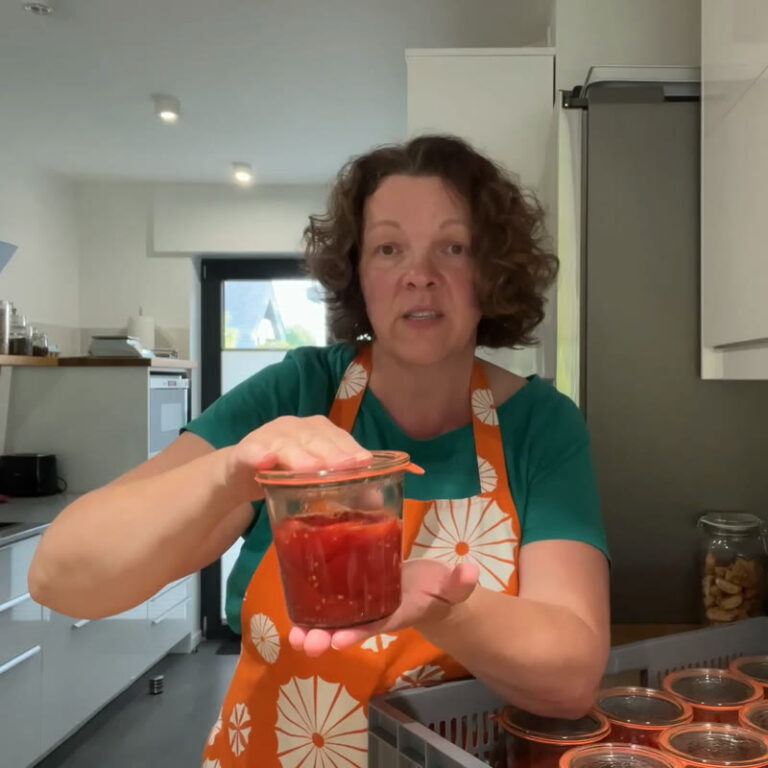
Canning tomatoes the European way (skins on, no pressure canner)
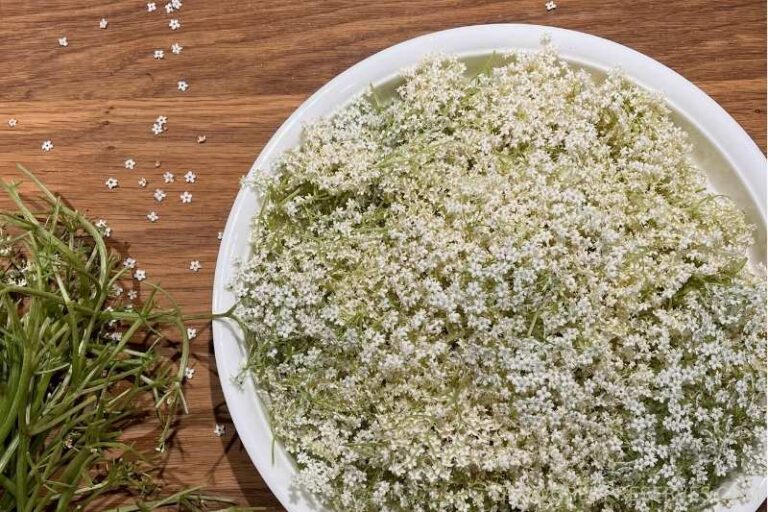
Elderflower Cordial Recipe – How to Make and Can Fragrant Elderflower Syrup
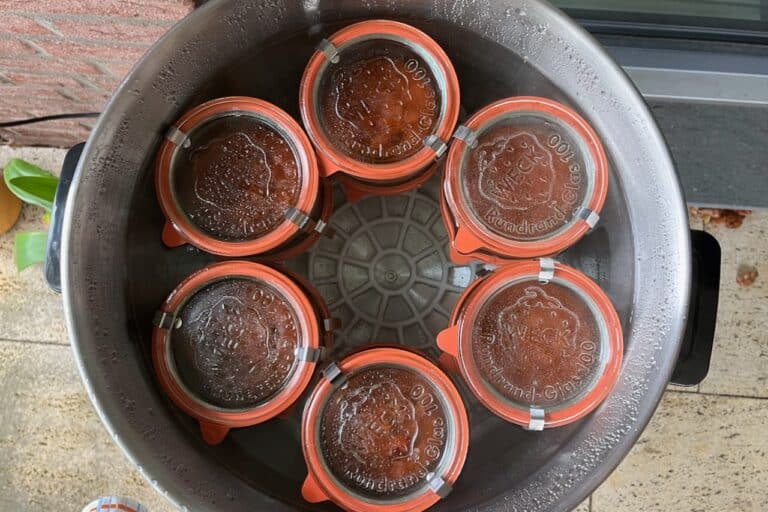
Roasted Tomato & Meat Sauce – Preserved by Water Bath Canning
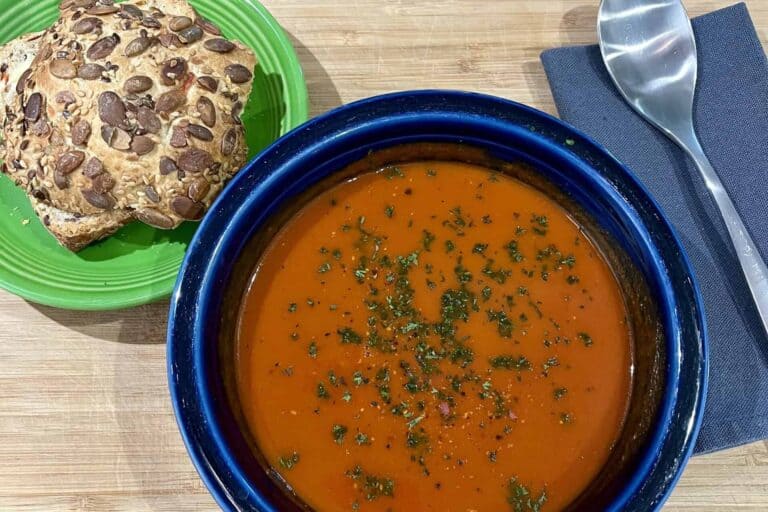
Roasted Red Pepper & Tomato Soup – Preserved by Water Bath Canning
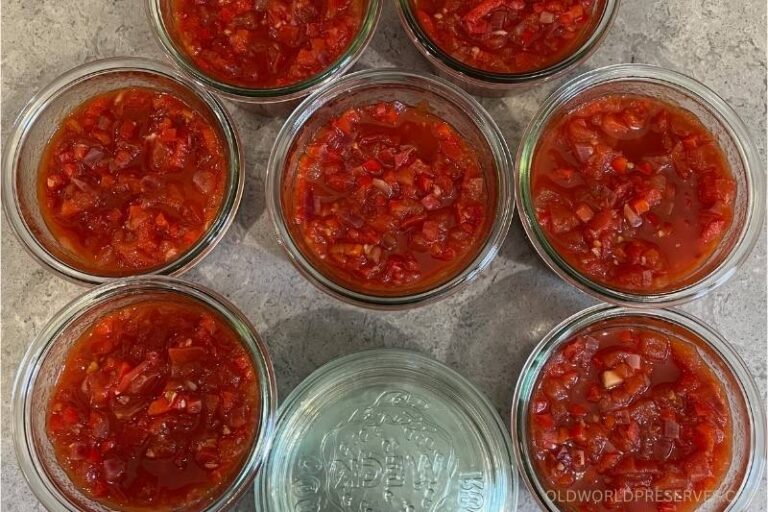
Chipotle Tomato & Red Pepper Salsa – Preserved by Water Bath Canning
Frequently asked questions
The questions I get most often about German water bath canning. Short, honest answers, each with a link to the full post where the detail lives.
What is German water bath canning?
German water bath canning (called Einkochen) is a way to preserve food by heating filled, sealed jars in boiling water for a long time. It uses plain boiling temperature (100°C), not pressurized steam. Safety comes from a set of steps working together: clean food, a long boil, a good seal, and a final reheat before eating. German households have done it for over a century.
Is German water bath canning safe?
Yes, when you do it carefully. German water bath canning isn’t the same as pressure canning, and no home canning is ever 100% safe. Its safety comes from a set of steps that each add to the safety margin: clean food, a long boil, a good seal, a waiting period before you eat, and a final reheat right before serving. The more steps you follow, the safer your food. Skip one, and the margin drops. That last step, briefly boiling low-acid food again before you eat it, is the one the German food-safety authority (the BfR) stresses most, because it destroys any toxin that might have formed in the jar. Not everyone does it every time, but it’s an easy layer to add, and it’s worth knowing what it protects against.
How does German water bath canning compare to USDA guidelines?
USDA rules say to pressure-can low-acid foods. The reason: boiling water alone can’t reliably kill botulism spores in every kitchen and every situation. The German system takes a different path, using layered steps, longer boiling times, and careful checking. Both are sound systems. They just start from different assumptions about risk, and about who is doing the canning. They aren’t the same, but each one holds up on its own terms.
Is home canning common in Germany?
Yes. Home canning has a long tradition in Germany. Weck jars and other canning jars sit on regular supermarket shelves, and homemade jam is such a part of German food culture that even people who preserve nothing else still make it. Hard numbers on how many homes do Einkochen for low-acid foods specifically are tough to find (I’ve looked). What’s clear is that the tradition never went away, and it’s growing again. That long track record, across generations, is the part that matters here.
Free 7-lesson course + newsletter
Canning Science Foundations
Seven short lessons on the biology behind home canning: why the rules exist, what actually keeps food safe, and how to look at any recipe and see where the safety lives (no chemistry degree required). Finish them and you stay on for the newsletter: seasonal harvests, kitchen experiments, and the science behind each one.